
How Do You Score Bread Dough for Better Oven Spring and a Beautiful Crust?
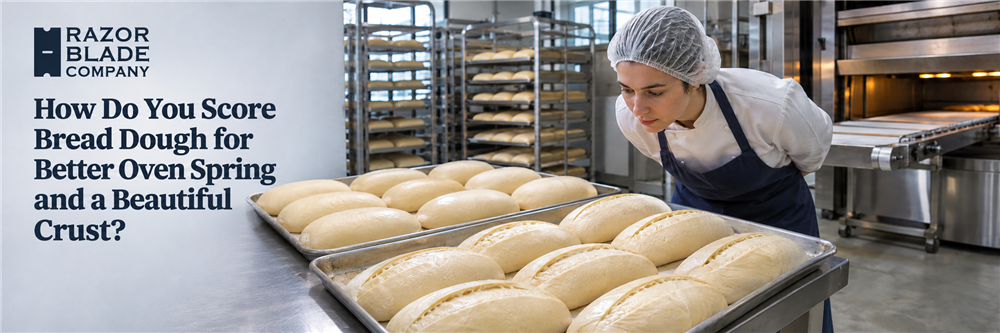
A few cuts across a loaf can look deceptively simple. Then you try scoring dough yourself. The surface pulls, the line wanders, or the pattern that looked promising before baking barely opens in the oven. Another loaf might spread farther than expected.
These are understandable frustrations. Scoring happens near the end of bread preparation, but its success depends partly on what came before—and what happens next in the oven. The dough’s preparation, the placement of the cuts and the baking conditions all contribute to the result.
Once you understand those connections, scoring becomes easier to approach. You can make decisions based on the dough in front of you rather than trying to reproduce a pattern without knowing why it works. Whether you are preparing your first baguette or attempting a more detailed sourdough design, the starting question is the same: where does this loaf need room to open?
What Happens When You Score Bread?Scoring is the process of making cuts in shaped bread dough before baking. Those cuts create openings where the loaf can expand during the first part of the bake, known as oven spring.
As the dough heats, gases expand, yeast briefly becomes more active and moisture turns to vapor. The loaf grows until its structure and crust begin to set. A score gives that growth somewhere to go; without enough release at the surface, expansion can be restricted.
Picture the narrow marks on an unbaked baguette widening into the familiar openings along its crust. The cuts are doing more than leaving a pattern. They are helping the dough develop into its finished shape.
This is why scoring deserves attention even when decoration is not your priority. A simple opening can serve the bread very well. The more elaborate details are choices you can make around that purpose.
Understanding Your Dough Before Picking Up the LameBy the time bread is ready for scoring, it has usually been shaped and completed its final proof, meaning the rise that follows shaping. Your recipe should explain how that stage is managed and when the loaf is ready for the oven.
For someone new to bread baking, it helps to think of scoring as part of that established sequence. It is not a separate craft project with unlimited time available. Have the baking setup ready and decide on the pattern before reaching the point where the dough needs to be scored.
You do not need to rehearse every movement. Simply knowing whether you intend to make one opening, a cross or several overlapping cuts removes a decision you would otherwise be making with the lame already in your hand.
This preparation also makes more ambitious scoring easier to manage. If you want decorative details, consider their position before the dough is ready rather than repeatedly adding marks because an area looks empty.
Why Cold Sourdough and Warm Dough Feel DifferentA refrigerated loaf generally feels firmer during scoring than a warm loaf. That firmer surface can make a cold sourdough easier to handle when making a deliberate opening or small details. Warmer dough may pull more readily as the lame moves through it.
Dragging can also occur when dough has overproofed—risen long enough to begin losing strength. In that situation, pressing harder does not resolve the underlying issue.
The practical lesson is to pay attention to how your recipe prepares the dough. A sourdough loaf coming from refrigeration and a baguette finishing its proof at room temperature should not be expected to feel identical beneath the lame.
“Sourdough” describes how the bread is fermented, but it does not, by itself, tell you how the dough will feel at scoring time. Before deciding how to approach it, consider whether your particular loaf is cold or warm and how its final proof was managed.
Scoring sourdough is a learning process for many enthusiasts because technique, application, and personal preference all factor into the final result once the bread is baked. Determining whether or not the cut depth could be improved or the dough could have been scored sooner, all depends on the trial and error most bread bakers experience in learning what works best for them. Instead of making multiple changes at once, try changing one aspect of your method at a time to best learn what makes the improvements you desire.
Choosing Where the Bread Will OpenBefore thinking about decorative marks, decide where the main opening belongs.
A scoring design starts with the functional cut: the opening, or set of openings, intended to guide the loaf’s expansion. Decorative cuts add detail to the surface and are generally shallower. Distinguishing their roles helps you build a pattern around the way the bread needs to open, rather than giving every mark the same depth and importance.
A long loaf gives you a different surface to work with than a round one. A baguette commonly uses overlapping cuts along its length; an elongated sourdough loaf may have a single long opening. A round loaf offers space for a balanced arrangement across the top.
- Baguettes: Use a series of overlapping cuts along the loaf’s length, concentrated near the centerline rather than running broadly across its width. Together, these cuts provide a connected route for dough expansion.
- Bâtards and elongated sourdough loaves: A single lengthwise score provides one main opening. Two overlapping scores offer an alternative when you want that opening divided into two sections.
- Boules and other round loaves: A cross or square arrangement distributes the openings around the top. In a cross pattern, the central cuts serve the functional role; smaller surrounding marks can remain decorative.
When choosing a design, focus on the intention of each scoring decision. Which cut is the main opening? Which marks are smaller accents? Are you aiming for one prominent feature or a pattern distributed across the surface?
The functional score must open the dough’s surface sufficiently to allow for expansion, while decorative marks need only enough depth to define the design. Choose the main opening for the loaf first, then use lighter cuts to add character around it.
How the Lame’s Curve and Angle Affect the CutThe way the lame enters the dough influences the kind of opening it creates.
A curved blade held at approximately 30 degrees to the surface helps form a flap that can lift during baking. That raised edge is commonly called an ear. A straight blade held approximately perpendicular to the dough encourages an opening that spreads outward, making it useful for crosses and many decorative marks.
The distinction gives you a reason to choose an approach. If you want a lifted edge, the angled entry matters. If you want the cut to open outward, an upright entry serves a different purpose.
These are general scoring techniques, not a claim that every lame can switch between curved and straight configurations. Understand the tool you are using rather than trying to force it into an arrangement it was not designed to provide.
In every scoring process, it is important to control your cuts, be deliberate with each motion, and always maintain proper blade safety. The best way to avoid hesitation and inconsistencies is by applying even pressure, continual cutting motions, and paying close attention to the start and end points with each score you make.
How Deep Should You Score the Dough?Depth is one of the more difficult parts of scoring to judge from a photograph. A line may look clear on the surface without having opened it sufficiently, while a cut that goes too far can allow the dough to spread excessively.
Some refrigerated sourdough loaves develop a more substantial outer skin and need a deeper score than breads proofed at room temperature. A baguette or miche—a large, round country loaf—may need only about ¼ inch. These are examples rather than fixed measurements for every dough.
Think about depth in relation to purpose. The main opening and a small decorative accent are different parts of the design, so they do not necessarily need identical cuts.
Four Scoring Patterns and What They Offer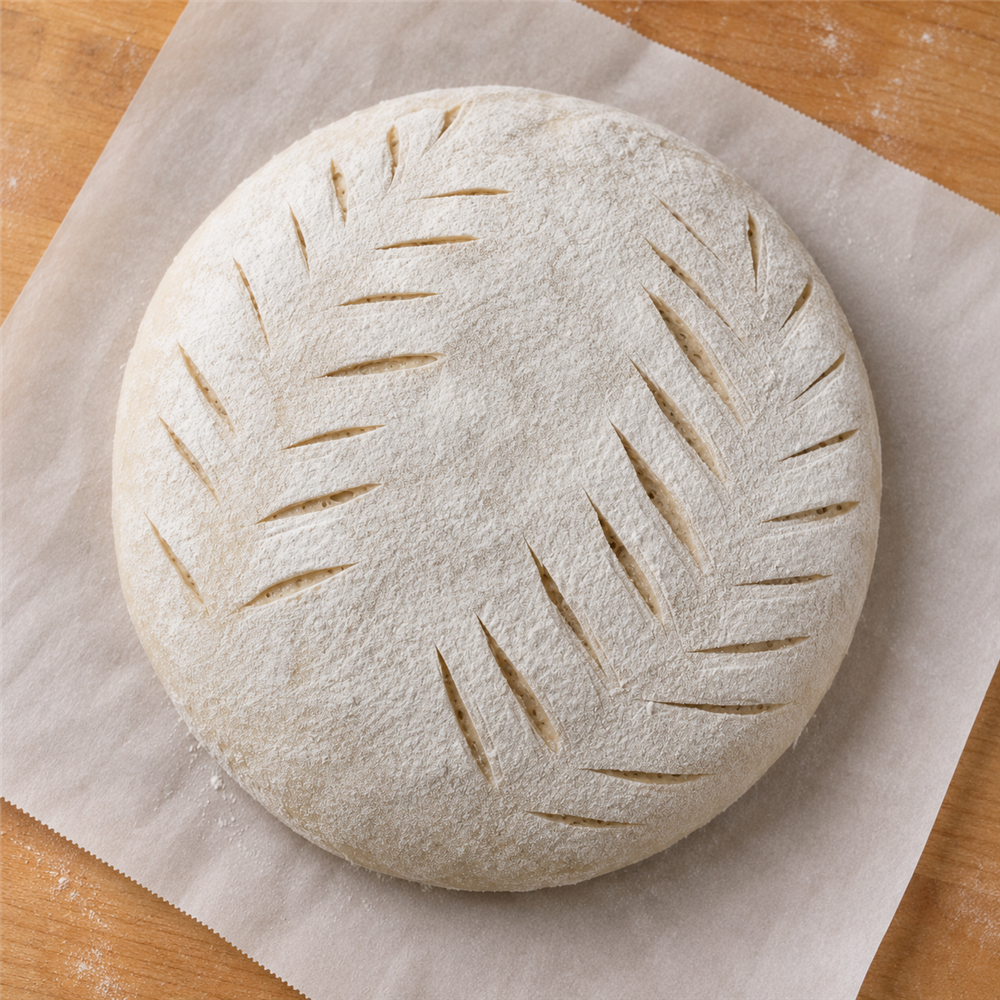
Paired diagonal marks create a leaf-like design on a round loaf. A straight blade suits these relatively shallow cuts. The pattern spreads decoration across the surface instead of drawing attention to one large opening.
A Cross with Smaller AccentsA central cross is cut somewhat deeper than the surrounding details, allowing the center to open more prominently. A straight blade suits both elements. The different depths give the principal opening and the decoration separate roles.
A Box Top with a DesignFour cuts outline a square, leaving room for decoration inside. A straight blade creates an outward-opening outline, while a curved approach can form lips that lift around the edges.
A Double Slash on a BâtardA bâtard is an elongated loaf. Two overlapping cuts made with a curved blade can create lips that peel back during baking. Their spacing affects the separation between the openings. This pattern can also suit whole-grain dough or dough with substantial additions that may spring less dramatically.
A useful way to choose among these designs is to decide which one you can explain to yourself before making it. Knowing why the cuts are arranged that way gives you more control than simply copying their appearance.
Why Steam Matters After the Scoring Is DoneEarly steam helps keep the surface flexible while the bread expands. Without sufficient moisture, the crust can set before the scores have opened as intended.
That makes steam part of the scoring discussion, even though it happens after the cuts are made. A carefully scored baguette can still have restricted openings if the bake does not support its expansion. The same connection matters for crusty sourdough.
Follow the steam arrangement specified for your recipe and equipment. A sourdough recipe baked in a covered vessel and baguettes baked uncovered should not be assumed to use the same method or timing.
When troubleshooting a score that barely opens, consider whether the surface set too quickly before making the next cut deeper. If the loaf expands well but finishes pale or soft, review the uncovered or dry portion of the bake. This helps distinguish two very different needs: giving the dough room to grow, then giving the crust time to finish.
Bringing the Decisions TogetherWhen scoring feels complicated, it is often because several decisions arrive at once. Separating them mentally can help: understand how the dough was prepared, decide where it should open, choose a pattern and consider how your cuts will serve it. The baking setup then needs to support the expansion you have allowed for.
Razor Blade Company’s 17-001 Baker’s Lame is intended for scoring artisan loaves, sourdough and French bread before baking. Made in France, the 4.75-inch tool is available in RBC’s Food Blades collection. As well, our AGBL-6000-0000 Accuforge Stainless Steel Double Edge Blade is designed for bakery and favored by bakers for scoring bread.
Good bread scoring brings together the dough’s preparation, the cuts you choose and the conditions in the oven. Choose a functional score that suits the loaf’s shape, adjust its depth and angle for the opening you want, and keep the decorative cuts lighter. Allowing for steam earlier on in the process gives those openings time to expand before the crust sets, while a drier finish allows the crust to brown. Whether you choose a single slash or a detailed pattern, the purpose remains the same: give the bread room to rise and watch the way it shapes as it opens.
Further Reading on Bread ScoringFor additional explanations and illustrated examples, explore these resources from King Arthur Baking:
- How to score bread dough — An explanation of scoring technique, including curved and straight blades, cutting angles and dough temperature.
- Bread scoring patterns and techniques — Illustrated examples of four scoring patterns, with guidance on placement and depth.
- Baking trials: Just how much does scoring impact bread? — Comparisons showing how scoring, cut placement, depth and steam influence the finished loaf.
Connect With Razor Blade Company
Twitter (X): https://x.com/TheRazorBladeCo
Facebook: https://www.facebook.com/RazorBladeCo
Instagram: https://www.instagram.com/razorbladeco/
Contact Information
Address: 15500 Erwin St Ste 1049, Van Nuys, CA, United States, California
Phone: (310) 452-1034
Email: [email protected]